Showing posts with label Echinodorus. Show all posts

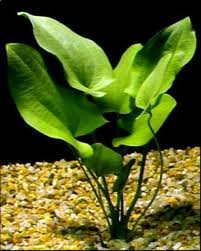
Echinodorus ovalis

 Quick Facts::  Echinodorus Ovalis
Care Level:Easy
Lighting:Medium
Placement:Midground
Maximum Length:12″ (30cm)
Water Conditions:65-79 F, 18-26 C, pH 5.5-7.0
Propagation:Adventitious Shoots, Division
Coloration:Green
Supplements:Iron 
Origin:Cuba


Characteristics
Echinodorus ovalis
is  related to Echinodorus cordifolius and listed by some authorities and importers as a synonym of that species, eg. E. cordifolius 'ovalis'. Originating from Cuba this small, orbiculate "sword" plant has low, wide growth which makes it suitable for small aquariums. The leaves are green and trimmed with very distinct pelucid lines.  


Water Conditions
65-79° F,  18-26° C
KH 3-8
pH 5.5-7.0

Care
Provide a medium amount of light in the range of 2 watts per gallon, using full spectrum bulbs.Ideal water conditions are a temperature between 65°-79°F, an alkalinity of 3 to 8 dKH, and a pH of 5.5-7.0. These plants benefit from regular additions of CO2, iron rich fertilizers, and trace elements. Iron deficiency can easily be detected as the leaves will turn pale. As with other Echinodorus species, Echinodorus ovalis is usually left alone by herbivorous and large fish.

Propagation
Propagation of Echinodorus ovalis is relative easy. The plant forms stems which (unlike most other "sword" plants) bend down towards the bottom and form their own adventitious  plants. Allow the new plant to develop a root system prior to separating it from the mother plant. Once the new plant establishes a root system, cut it at the root with very sharp, sterilized scissors and replant the "baby".  Echinodorus ovalis is hardy and easy for both beginners and the more experienced.


Echinodorus opacus

 Quick Facts::  Echinodorus Opacus
Care Level:Easy
Lighting:Medium
Placement:Foreground
Maximum Length:5.9″ (15cm)
Water Conditions:65-79 F, 18-26 C, pH 5.5-7.0
Propagation:Adventitious Shoots, Division
Coloration:Green
Supplements:Iron 
Origin:South America


Echinodorus macrophyllus

 Quick Facts::  Echinodorus Macrophyllus
Care Level:Easy
Lighting:Medium
Placement:Background
Maximum Length:20″ 
Water Conditions:68-82 F, 20-28 C, pH 5.5-7.5
Propagation:Root stock or Rhizome Division
Coloration:Green
Supplements:Iron 
Origin:South America


Echinodorus horizontalis

 Quick Facts::  Echinodorus horizontalis
Care Level:Easy
Lighting:Medium
Placement:Midground
Maximum Length:16″ 
Water Conditions:71-82 F, 22-28 C, pH 5.5-7.5
Propagation:Adventitious Shoots, Division
Coloration:Green
Supplements:Iron 
Origin:South America

Spade Leaf Sword - Echinodorus cordifolius


 Quick Facts::  Echinodorus bracteatus

Care Level:Easy
Lighting:Medium
Placement:Midground
Maximum Length:35 - 55 cm ( 13.78" - 21.65" )
Water Conditions:71-82 F, 22-28 C, pH 6.2-7.1
Propagation:Division
Coloration:Green
Supplements:Iron Rich Fertilizer
Origin:North America
 Common Nanes:            Spade Leaf Sword, Creeping burhead
 

Echinodorus bracteatus

 Quick Facts::  Echinodorus bracteatus
Care Level:Easy
Lighting:Medium
Placement:Background
Maximum Length:75″ (190cm)
Water Conditions:68-81 F, 20-27 C, pH 6.5-7.5
Propagation:Adventitious Shoots, Division
Coloration:Green
Supplements:Iron Rich Fertilizer
Origin:Panama and Ecuador


Amazon Sword - Echinodorus bleheri

 Quick Facts::  Echinodorus bleheri
Care Level:Easy
Lighting:Medium
Placement:Background
Maximum Length:20″ (50cm)
Water Conditions:68-81 F, 20-27 C, pH 6.5-7.5
Propagation:Adventitious Shoots, Runners
Coloration:Green
Supplements:Iron Rich Fertilizer
Origin:South America


Upright Burhead - Echinodorus berteroi

 Quick Facts::  Echinodorus berteroi
Care Level:Easy
Lighting:Medium
Placement:Background
Maximum Length:28″
Water Conditions:68-81 F, 20-27 C, pH 6.5-7.5
Propagation:Adventitious Shoots, Seeds
Coloration:Green
Supplements:Iron Rich Fertilizer
Origin:North and South America


Aschersons sword plant - Echinodorus aschersonianus

 Quick Facts::  Echinodorus aschersonianus
Care Level:Moderate
Lighting:Low To Medium
Placement:Mid-ground
Maximum Length:8″
Water Conditions:68-78 F, 20-26 C, pH 6.5-7.5
Propagation:Runners
Coloration:Green
Supplements:Iron Rich Fertilizer
Origin:South America


Argentine Sword Plant - Echinodorus argentinensis

 Quick Facts::  Echinodorus argentinensis
Care Level:Moderate
Lighting:Medium
Placement:Mid-ground
Maximum Length:18″
Water Conditions:60-77 F, pH 6.5-7.5
Propagation:Adventitious Shoots, Rhizome Division
Coloration:Green
Supplements:Iron Rich Fertilizer
Origin:South America


Echinodorus angustifolius

 Quick Facts::  Echinodorus angustifolius
Care Level:Moderate
Lighting:Medium
Placement:Mid-ground
Maximum Length:12″
Water Conditions:69-86 F, 21-30 C, pH 5.7-7.5
Propagation:Runners
Coloration:Green
Supplements:Iron Rich Fertilizer
Origin:Brazil


Ozelot Sword (Echinodorus ozelot)

Quick Facts::  Ozelot Sword (Echinodorus ozelot)

Care Level:Moderate
Lighting:Medium To High
Placement:Mid-ground
Maximum Length:20″
Water Conditions:73-83 F, pH 6.5-7.5, KH 3-8
Propagation:Adventitious Shoots, Rhizome Division, Seeds
Coloration:Green
Supplements:Iron,CO2 Supplementation
Origin:South America


Characteristics
Echinodorus ozelot is also known as Ozelot Sword is a hybrid between Echinodorus schlueteri 'Leopard' and Echinodorus barthii, which is what gave it the marbled spots on the elongated green leaves. This plant has a beautiful red-brown leaves with black spots and as the leaves age, they will gradually transform to a shiny-green, but will retain their dark spots. These plants are amphibious, meaning they can grow partially above the water.


Water Conditions
73-83° F
KH 3-8
pH 6.5-7.5

Care
Provide a medium amount of light in the range of 3 watts per gallon, using full spectrum bulbs.Ideal water conditions are a temperature between 73°-83°F, an alkalinity of 3 to 8 dKH, and a pH of 6.5-7.5. These plants benefit from regular additions of CO2 and iron rich fertilizers.


Propagation
Propagation of the Ozelot Sword (Echinodorus ozelot) is relative easy. It can be propagated by dividing the rhizome or by separating side shoots that grow off of leaves. Allow the new plant to develop a root system prior to separating it from the mother plant. Once the new plant establishes a root system, cut it at the root with very sharp, sterilized scissors and replant the "baby". A prolific plant under most circumstances, the development of a new leaf once a week is not uncommon.